Karnak Temple Trips
Karnak Temple Trips
Karnak Temple Trips offer travelers an unforgettable journey into one of the greatest religious complexes ever built by humanity. Located on the east bank of the Nile in Luxor, Karnak Temple is not a single monument but a vast collection of sanctuaries, pylons, chapels, and sacred lakes constructed over more than 2,000 years. Visiting this extraordinary site allows travelers to experience the power, devotion, and architectural brilliance of ancient Egypt on an epic scale. Karnak Temple Trips are essential for anyone interested in history, archaeology, and ancient civilizations.
History and Development of Karnak Temple
The heart of Karnak Temple Trips is the exploration of the monumental Karnak Temple complex, primarily dedicated to the god Amun-Ra. Construction began during the Middle Kingdom and continued through the New Kingdom and later periods, with contributions from more than 30 pharaohs, including Senusret I, Thutmose III, Hatshepsut, Seti I, and Ramses II.
Each ruler added new structures to demonstrate devotion and political power, resulting in a layered architectural masterpiece. Walking through the complex during Karnak Temple Trips, visitors can clearly see how Egyptian religious architecture evolved over centuries, reflecting changes in artistic style, religious emphasis, and royal ambition.
The Great Hypostyle Hall
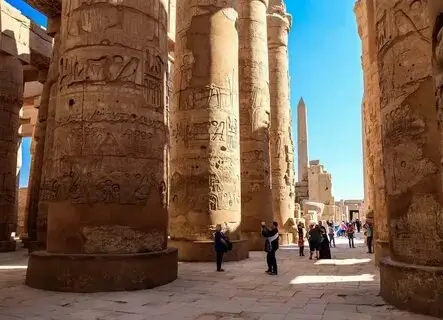
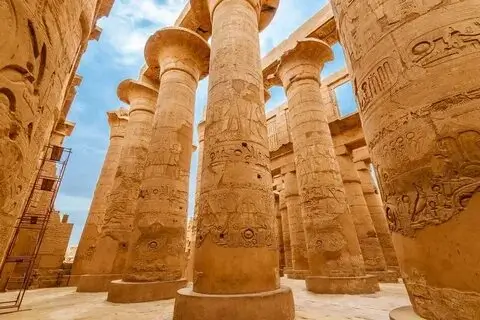
One of the most impressive highlights of Karnak Temple Trips is the Great Hypostyle Hall, one of the largest religious halls ever constructed. This massive space contains 134 gigantic columns, some reaching over 20 meters in height. The central columns are taller than the surrounding ones, allowing sunlight to filter through clerestory windows and illuminate the carved hieroglyphics.
The walls and columns are covered with inscriptions and reliefs depicting religious rituals, offerings to the gods, and military victories of Seti I and Ramses II. Standing within this hall during Karnak Temple Trips gives visitors a powerful sense of the scale and spiritual importance of ancient Egyptian worship.
Sacred Lake and Temple Precincts
Another key feature explored during Karnak Temple Trips is the Sacred Lake, which was used by priests for ritual purification before ceremonies. The lake remains remarkably well preserved and reflects the surrounding columns and pylons, creating stunning photographic opportunities.
Karnak is composed of several precincts, including the Precinct of Amun-Ra, the Precinct of Mut, and the Precinct of Montu. Each area served different religious functions and housed chapels, shrines, and statues. Exploring these precincts helps visitors understand the complexity of ancient Egyptian religion and the organizational structure of temple life.
Obelisks and Royal Monuments
Karnak Temple Trips also highlight some of the tallest obelisks ever erected in ancient Egypt. Queen Hatshepsut’s granite obelisks stand as symbols of divine legitimacy and royal power. Carved from single blocks of stone and transported from Aswan, these monuments demonstrate extraordinary engineering skill.
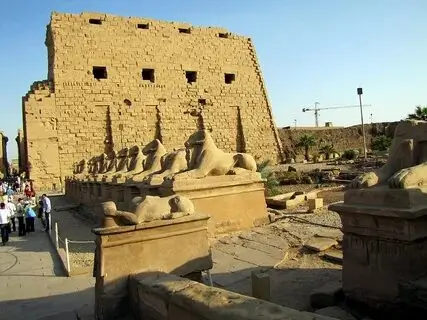
Numerous statues of gods and pharaohs line the temple pathways, reinforcing the connection between divine authority and kingship. These monuments make Karnak Temple Trips a visually striking and historically rich experience.
Sound and Light Show Experience
Karnak Temple Trips
Many Karnak Temple Trips include the famous Sound and Light Show, which takes place in the evening. Illuminated monuments, dramatic narration, and music bring the history of Karnak to life, recounting the stories of great pharaohs and the glory of ancient Thebes.
This nighttime experience offers a completely different perspective from daytime visits and is especially popular with travelers seeking an immersive and atmospheric introduction to the site.
Best Time to Plan Karnak Temple Trips
The best season for Karnak Temple Trips is between October and April, when temperatures range from 20°C to 30°C, providing comfortable conditions for walking and exploration. During the summer months, temperatures in Luxor can exceed 40°C, making early morning or late afternoon visits more suitable.
Visiting Karnak early in the day allows travelers to avoid crowds and enjoy softer lighting for photography.
Travel Tips for Karnak Temple Trips
To get the most out of Karnak Temple Trips, travelers should:
• Hire licensed Egyptologist guides for accurate historical interpretation
• Wear comfortable walking shoes
• Bring water and sun protection
• Allocate at least 2–3 hours to explore the complex
• Combine the visit with nearby attractions such as Luxor Temple
Good preparation ensures a rewarding and comfortable experience.
Conclusion
Karnak Temple Trips provide a deep and awe-inspiring encounter with ancient Egyptian religion, architecture, and political history. From the colossal Hypostyle Hall and towering obelisks to sacred lakes and ceremonial pathways, Karnak stands as a monumental record of over two millennia of devotion and power. Whether explored by day under the Egyptian sun or experienced through the Sound and Light Show at night, Karnak Temple Trips offer one of the most powerful and unforgettable cultural experiences in Egypt.