Valley of the Kings
Valley of the Kings
Table of Contents
ToggleAbout Valley of the Kings: The Royal Burial Ground of Ancient Egypt
Valley of the Kings
The Valley of the Kings is one of the most important archaeological sites in the world and a cornerstone of ancient Egyptian history. Located on the west bank of the Nile near Luxor, served as the royal burial ground for pharaohs and powerful nobles of the New Kingdom (circa 1550–1070 BCE). Today, the Valley of the Kings is internationally recognized for its richly decorated tombs, historical significance, and contribution to modern understanding of ancient Egyptian beliefs about the afterlife.
Unlike earlier pyramid burials, New Kingdom rulers chose of the for its secluded location and natural protection. According to Encyclopaedia Britannica, this shift reflected both security concerns and religious changes, as hidden rock-cut tombs were considered safer from tomb robbers and symbolically connected to the god Osiris, ruler of the underworld. The remains one of the most visited and studied ancient burial sites in Egypt.
Historical Importance of the Valley of the Kings
The was selected for its strategic and symbolic location beneath the peak of Al-Qurn, a mountain resembling a natural pyramid. This setting reinforced royal power while aligning with ancient Egyptian cosmology. More than 60 tombs have been discovered in the valley, ranging from simple chambers to complex underground networks decorated with religious texts and elaborate artwork.
Many of Egypt’s most famous rulers were buried in the Valley of the Kings, including Ramesses II, Seti I, Thutmose III, and Tutankhamun. According to UNESCO, the valley forms part of the Ancient Thebes World Heritage Site due to its exceptional testimony to ancient funerary practices and royal ideology. Each tomb provides valuable insight into the political power, religious beliefs, and artistic traditions of the New Kingdom.
Tomb Architecture and Artistic Decoration
Valley of the Kings
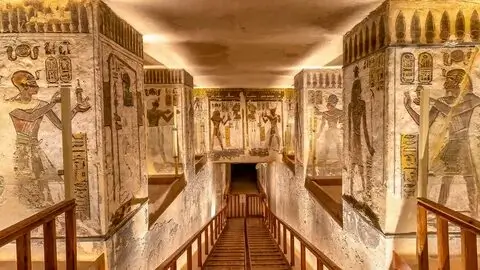
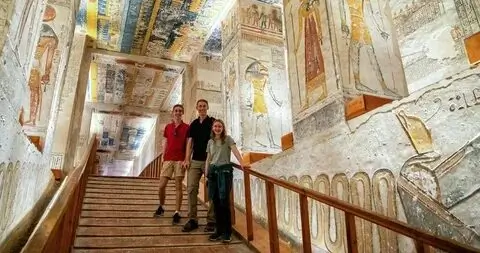
The tombs of are masterpieces of ancient engineering and design. Carved deep into limestone rock, they were carefully planned to include corridors, halls, and burial chambers aligned with religious symbolism. Walls were covered with brightly painted reliefs depicting scenes from sacred funerary texts such as the Book of the Dead, the Amduat, and the Book of Gates.
According to research by the Griffith Institute at the University of Oxford, these texts were intended to guide the pharaoh’s soul through the dangers of the underworld and ensure rebirth in the afterlife. The artistic quality of the tombs varies depending on the reign and resources of each ruler, but many remain remarkably well preserved, offering a vivid glimpse into ancient Egyptian religious thought.
The Discovery of Tutankhamun’s Tomb
One of the most significant events in archaeological history occurred in 1922, when British archaeologist Howard Carter discovered the nearly intact tomb of Tutankhamun (KV62) in the Valley of the Kings. This discovery captured global attention and transformed modern understanding of ancient Egypt. According to the British Museum, the treasures found in Tutankhamun’s tomb, including the famous golden mask, provided unprecedented insight into royal burial customs and craftsmanship.
The discovery also highlighted the importance of
as a source of historical knowledge. While most other tombs had been looted in antiquity, Tutankhamun’s burial revealed how richly furnished royal tombs once were, reinforcing the valley’s global archaeological value.
Religious Beliefs and the Afterlife
The Valley of the Kings reflects ancient Egyptian beliefs about death and rebirth. Pharaohs were considered divine beings whose survival in the afterlife was essential to cosmic order. Tomb decoration focused on transformation, protection, and renewal, emphasizing the journey of the soul through darkness toward eternal life.
According to National Geographic, the west bank of the Nile was traditionally associated with death because the sun sets in the west, symbolizing the end of life before rebirth. This symbolism explains why , along with other royal cemeteries, was located opposite the city of the living in ancient Thebes.
Conservation and World Heritage Status
The Valley of the Kings faces ongoing conservation challenges due to tourism, environmental factors, and the fragility of ancient paintings. In 1979, UNESCO designated the Valley of the Kings as part of the Ancient Thebes with its Necropolis World Heritage Site, recognizing its outstanding universal value. Conservation efforts focus on controlling humidity, managing visitor numbers, and preserving wall paintings for future generations.
The Egyptian Ministry of Tourism and Antiquities works in collaboration with international experts to protect the site while maintaining visitor access. These efforts ensure that the Valley of the Kings remains both an educational resource and a sustainable tourist destination.
Visiting the Valley of the Kings Today
Today, visitors to the Valley of the Kings can explore a selection of open tombs, which rotate periodically to reduce damage. Guided visits provide historical context and explain the symbolism of tomb decoration and architecture. The best time to visit is generally between October and April, when temperatures in Upper Egypt are more suitable for outdoor exploration, according to climate data from the World Meteorological Organization.
Early morning visits are recommended to avoid crowds and heat, allowing travelers to fully appreciate the atmosphere and detail of this extraordinary site.
Why the Valley of the Kings Remains a Global Treasure
The Valley of the Kings is far more than a burial ground; it is a powerful record of ancient Egyptian beliefs, art, and royal power. Through its tombs, texts, and discoveries, the valley continues to educate and inspire scholars and travelers alike. As one of the most important archaeological sites on Earth, remains an essential destination for anyone seeking to understand the legacy of ancient Egypt

All Categories
Recent Posts

Hurghada submarine tour
Hurghada dolphin house tour

Paradise Island Hurghada