
Historical Castles Egypt
Historical Castles Egypt
Table of Contents
ToggleHistorical Castles in Egypt
Historical castles in Egypt represent a powerful testament to the country’s strategic importance across centuries of conflict, trade, and cultural exchange. Built by different civilizations including the Romans, Byzantines, Ayyubids, Mamluks, and Ottomans, these fortresses were designed to defend cities, protect trade routes, and control coastlines. Today, historical castles in Egypt are major heritage landmarks that attract travelers, historians, and architecture enthusiasts interested in military history and Islamic architecture.
The Strategic Importance of Historical Castles in Egypt
Historical Castles EgyptThe construction of historical castles in Egypt was closely linked to geography. Egypt’s position between Africa, Asia, and the Mediterranean made it a target for invasions and a hub for commerce. Castles were often built on coastlines, near river crossings, or on elevated ground to provide military advantage. These structures played a crucial role in protecting ports, cities, and pilgrimage routes. Historical castles in Egypt also served as administrative centers and symbols of political power.Historical Castles Egypt
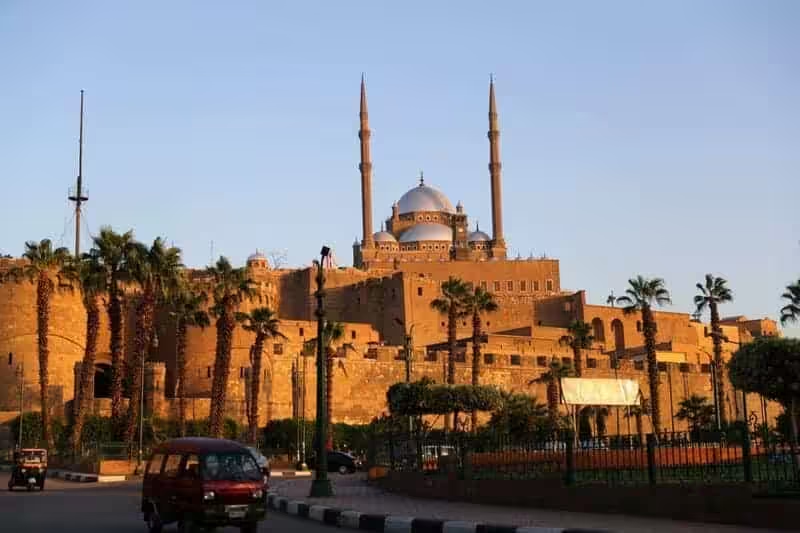
Citadel of Saladin in Cairo

Historical Castles Egypt
Historical Castles EgyptThe Citadel of Saladin is one of the most famous historical castles in Egypt and a masterpiece of medieval Islamic military architecture. Built in the late 12th century by Sultan Saladin, the citadel was constructed to defend Cairo against Crusader attacks. Strategically located on the Mokattam Hills, it offers panoramic views of the city. Over time, the Citadel of Saladin became the seat of government for several dynasties and includes important landmarks such as the Mosque of Muhammad Ali. This fortress remains a central symbol of Egypt’s Islamic heritage.
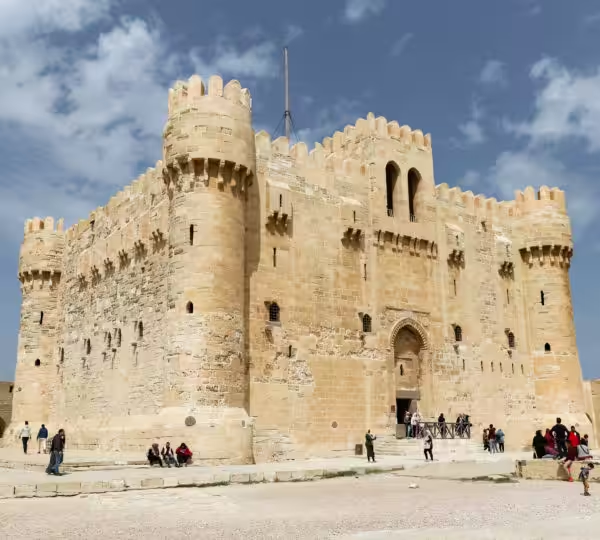
Qaitbay Citadel in Alexandria
Qaitbay Citadel is among the most iconic historical castles in Egypt, located on the Mediterranean coast of Alexandria. Built in 1477 AD by Sultan Al-Ashraf Qaitbay, the citadel stands on the exact site of the ancient Lighthouse of Alexandria, one of the Seven Wonders of the Ancient World. The fortress was designed to protect the city from naval invasions and reflects advanced defensive techniques of the Mamluk period. Today, Qaitbay Citadel is a major tourist attraction and a powerful reminder of Egypt’s maritime history.
Babylon Fortress in Old Cairo
Historical Castles EgyptBabylon Fortress is one of the oldest historical castles in Egypt, dating back to the Roman period around the 1st century AD. Originally constructed as a military stronghold to control the Nile and protect Roman interests, the fortress later became a key site for early Christianity in Egypt. Several famous Coptic churches, including the Hanging Church, were built within or around its walls. Babylon Fortress highlights the layered history of Egypt, where Roman, Christian, and Islamic civilizations intersect.
Salah El-Din Castle in Taba
Historical Castles EgyptLocated in the Sinai Peninsula, Salah El-Din Castle, also known as Pharaoh’s Island Fortress, is another remarkable example of historical castles in Egypt. Built during the Ayyubid period in the 12th century, this fortress controlled the Gulf of Aqaba and protected trade and pilgrimage routes. Its strategic position allowed visibility across four countries: Egypt, Saudi Arabia, Jordan, and Israel. The castle’s preserved walls, towers, and storage rooms demonstrate the military ingenuity of medieval Islamic engineers.
Fortresses of the Red Sea Coast
Historical castles in Egypt are also found along the Red Sea coast, where forts were built to protect ports and maritime trade routes. These fortresses played an important role during the Ottoman period, securing Egypt’s eastern borders and ensuring safe passage for pilgrims traveling to Mecca. Although less famous than Cairo or Alexandria fortifications, Red Sea castles add depth to the understanding of Egypt’s defensive network and regional influence.
Architectural Features of Historical Castles in Egypt
Historical Castles Egypt
Historical Castles EgyptThe architecture of historical castles in Egypt reflects both local traditions and foreign influences. Thick stone walls, watchtowers, narrow entrances, and elevated positions were common defensive features. Many castles incorporated advanced elements such as arrow slits, drawbridges, and internal courtyards. Islamic decorative elements, inscriptions, and geometric designs often blended functionality with artistic expression. Studying these architectural details helps historians understand the evolution of military engineering in Egypt.
Cultural and Tourism Value of Historical Castles in Egypt
Today, historical castles in Egypt are not only archaeological sites but also cultural and tourism landmarks. They host museums, exhibitions, and cultural events that bring history to life. Visiting these castles allows travelers to explore Egypt beyond ancient temples and pyramids, offering insight into medieval and Islamic periods. Historical castles in Egypt contribute significantly to cultural tourism and heritage preservation efforts.
Conclusion: The Legacy of Historical Castles in Egypt
Historical Castles Egypt Historical castles in Egypt stand as enduring symbols of strength, resilience, and strategic vision. From Roman fortresses to Islamic citadels, these structures reflect centuries of military, political, and cultural history. Exploring historical castles in Egypt offers a deeper understanding of the country’s role in shaping regional and global history. As preserved heritage sites, they continue to educate and inspire visitors from around the world.

All Categories
Recent Posts
Luxury Travel

Red Sea Resorts

Sharm El Sheikh Resorts